What You Click When Nobody's Watching: Indie Games as the New Confessional
There's a moment in Disco Elysium where the game asks you, through the fractured voices in your own head, what kind of person you want to be. Not in a character-creation screen kind of way. In a raw, almost uncomfortable way that feels less like a tutorial and more like a therapist leaning forward in their chair. And something strange happens: you answer honestly. Maybe for the first time in a long time.
That's not an accident. And it's not unique to that game.
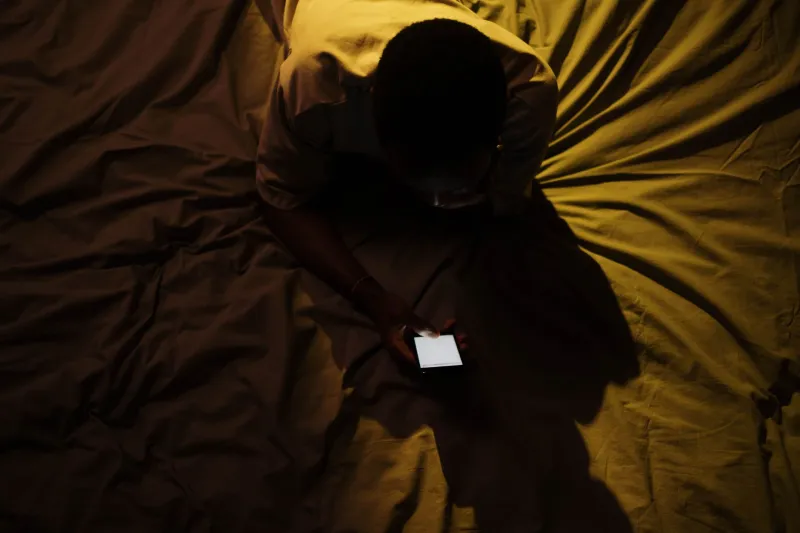
Indie studios have been quietly engineering something that mainstream gaming and social media have almost entirely failed to build — a space where players feel genuinely safe enough to be themselves. No audience. No leaderboard. No one watching your reaction in a Twitch chat. Just you, a branching narrative, and a set of choices that somehow cuts closer to the bone than any personality quiz or therapy intake form ever managed.
The Performance Problem
Let's be honest about what most of our digital lives look like right now. Social media is a highlight reel. Mainstream multiplayer games are tribal and performative — you play the meta build, you communicate in memes, you project competence or humor or toughness because the audience is always on. Even single-player AAA games tend to funnel you toward a heroic identity. You're Kratos. You're Commander Shepard. The power fantasy is the product.
There's nothing wrong with that, exactly. But it means we spend an enormous amount of time in digital spaces playing a character — and that character is usually a shinier, braver, more decisive version of ourselves.
Indie games break that contract. Especially the weird ones. The experimental ones. The kind that show up on itch.io at 2 a.m. with hand-drawn art and a content warning you didn't expect.
Anonymous Choices, Real Confessions
What makes the indie confessional work is a combination of factors that mainstream design almost never gets right simultaneously.
First, there's anonymity — or at least the feeling of it. When you're playing a small narrative game alone on your laptop, there's no social cost to the choice you make. No one sees you decide to steal the medicine in This War of Mine. No one watches you choose the cruel dialogue option just to see what happens. And in that privacy, something loosens. You stop optimizing for how the choice looks and start making the choice that actually reflects something true about you — your curiosity, your fear, your capacity for selfishness or sacrifice.
Second, the best indie games build consequence systems that feel less like punishment and more like accountability. It's not "you lost ten health points." It's "the character you abandoned stopped trusting you, and now the game remembers that." That's a fundamentally different emotional register. It's the difference between a rule and a relationship.
Games like Hades, Night in the Woods, Celeste, and Omori don't just tell stories at you. They construct environments where your responses to the story become data — about grief, about avoidance, about what you reach for when things get hard. The game learns you as you play it. And somewhere in that loop, you start learning yourself.
The Therapy Adjacent Thing Nobody Talks About
Here's the part that's a little uncomfortable to say out loud: a lot of people are processing real emotional content through indie games in ways that look a lot like therapy — without ever calling it that.
Play Celeste long enough and you're not just platforming. You're sitting with the metaphor of a mountain and a panic attack and a version of yourself that keeps telling you to give up. Play Unpacking and you're excavating a life through objects, making quiet judgments about what matters and what gets left behind. Play What Remains of Edith Finch and you're confronting the way families pass trauma down like heirlooms.
None of these games ask you to lie. None of them reward the performance of okayness. They meet you wherever you are and let you stay there for a while.
For a generation that grew up being told to curate their feelings for public consumption — on Instagram, on Twitter, in group chats that never really feel private — that's genuinely radical. The indie game becomes the one place where the mask is optional.
Why Experimental Design Makes This Possible
It matters that we're talking specifically about indie and experimental games here, not just any game with a story. The design philosophy is different at its root.
Indie studios — often small teams, sometimes single developers — tend to build from personal experience. They're not running a game through forty rounds of focus testing to sand off the edges that might alienate a broad market. They're making something specific and strange and true to them, which means it has the texture of actual human experience rather than the smoothed-out simulation of it.
That specificity creates trust. When a game feels like it was made by someone who actually felt something, you feel safer feeling something back.
The branching narrative format amplifies this. When you're given real choices — not the illusion of choice that leads to the same cutscene either way, but choices that genuinely reshape what happens next — you have to commit to something. And commitment, even in a fictional context, reveals preference. Reveals fear. Reveals what you'd actually do if you thought no one was keeping score.
The Confession You Didn't Mean to Make
Here's what's wild about all of this: most players don't walk into an indie game intending to be honest. They sit down to be entertained, to kill an hour, to decompress. And then somewhere in the middle of a conversation with a fictional character at 11:30 on a Tuesday, they make a choice that surprises them. They choose vulnerability when they expected to choose armor. They admit, through a dialogue option, something they haven't said to another person in months.
The game doesn't judge it. It just continues. And somehow that's the most affirming thing.
Factitious games — the ones built to play you back — understand that the most interesting story isn't the one the developer wrote. It's the one that emerges in the space between the developer's intentions and the player's true self. The confession box isn't the game. It's what happens when the two meet.
So the next time you find yourself reloading a save because you made a choice that felt wrong, or pausing before a dialogue option longer than the moment deserves, or feeling something unexpected when a pixel-art character looks directly at the camera — pay attention to that.
That's not just gameplay. That's you, telling the truth.