The Game Lied to You. That Was the Point.
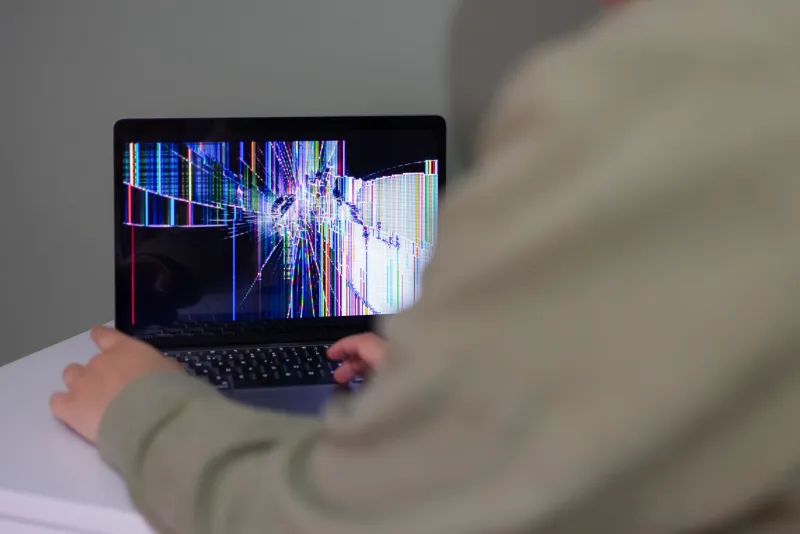
There's a moment in certain games where the floor drops out from under you — not because a boss appeared, not because the difficulty spiked, but because you realize the game has been lying to your face this whole time. The health bar was fiction. The dialogue you trusted was fabricated. The save you made doesn't mean what you thought it meant.
And somehow, weirdly, that feels more honest than anything else you've played this year.
This is the unreliable narrator problem — except calling it a "problem" kind of misses the point. In indie game design circles, deception has quietly become one of the most powerful storytelling tools available. Not the cheap kind of deception, where a twist exists just to shock you. The kind that makes you feel something true about yourself, about trust, about the stories you tell to get through the day.
When the Interface Becomes the Antagonist
Most games establish an implicit contract with players: the UI tells the truth. Your health is your health. Your inventory is your inventory. The map is the map. Indie developers — especially in the experimental narrative space — have figured out that breaking this contract is an extraordinarily intimate act.
Games like Doki Doki Literature Club and Undertale have already gotten a lot of ink for their fourth-wall-breaking tricks, but what's worth examining isn't the individual gimmick — it's the why. When Toby Fox lets the genocide route quietly alter the game's code and startup behavior, he's not just doing something clever. He's making a statement about consequence that no cutscene could deliver. The medium is the message. The interface lying to you is the story.
Smaller, less-celebrated titles have pushed this even further. Games where the "quit without saving" prompt gaslights you. Games where tutorial text gives you instructions that will actively hurt you later. Games where the achievement system mocks your choices in real time. Each of these choices forces the player out of passive consumption and into something uncomfortably active — you have to reckon with what you believed and why.
Deception as Emotional Honesty
Here's the thing that feels counterintuitive until it doesn't: lying to players can be one of the most emotionally honest things a developer does.
Think about what traditional storytelling does with unreliable narrators — Gone Girl, Fight Club, The Usual Suspects. The unreliable narrator works because it mirrors how we actually experience reality. We are all, to some degree, unreliable narrators of our own lives. We misremember. We rationalize. We construct stories that protect us from truths we're not ready to face.
When a game's narrator is untrustworthy, it's easy enough to clock it as a literary device and keep your distance. But when the interface lies — when the thing you've been trained since childhood to treat as objective reality turns out to be just another perspective — the effect is visceral in a way prose rarely achieves. Your hands are literally on the controller. You were there. You made those choices. And now you're being told the ground you were standing on was never solid.
That's not a trick. That's a philosophical gut-punch.
Why Indie Studios Go Here (And AAA Studios Don't)
Let's be real: a major studio isn't going to ship a game where the save system actively deceives players. The QA nightmares alone would be catastrophic, and the Reddit backlash would be immediate and merciless. "The game is broken" would trend before anyone had time to explain that the brokenness was intentional.
Indie developers operate in a different risk environment. They're not managing a franchise. They're not protecting a $200 million investment. They can afford to make something that alienates half the players who try it, as long as the other half feel like they've experienced something they can't shake.
This is where the factitious nature of these games becomes interesting — and I mean that word in its oldest sense, meaning something carefully constructed, made with craft and intention. The deception in these games isn't sloppy or accidental. It's engineered. Every false breadcrumb, every misleading tooltip, every narrator who turns out to be compromised — these are design decisions that took more work, not less, than building a straightforward experience.
The Twist Isn't the Point
A lot of mainstream coverage of unreliable narrator games focuses on the reveal — the moment when the curtain drops and you find out you've been had. But fixating on the twist misses what actually makes these games resonate.
The reveal is just the detonator. The real explosive was laid down in every moment before it — every time you trusted without questioning, every time you accepted the game's framing without pushing back. The twist doesn't create the emotion. It just makes you look back at everything you already felt and realize you were feeling it for reasons you didn't fully understand.
The best unreliable narrator games aren't trying to make you feel foolish for being deceived. They're trying to make you feel something specific about being deceived — about how readily we accept the stories we're handed, how quickly we fill in gaps with assumptions, how much we want to believe the world is coherent and navigable.
In that sense, the game lying to you is the game telling you the truth about yourself.
What You're Actually Signing Up For
If you're the kind of player who wants to know exactly where you stand at all times, unreliable narrator games are going to be frustrating. That's not a knock — different games serve different needs, and there's nothing wrong with wanting a trustworthy experience.
But if you're willing to let a game make you genuinely uncertain — to sit with the discomfort of not knowing whether what you're seeing is real within the fiction — the payoff is unlike almost anything else interactive storytelling can offer.
Because at the end of the day, that uncertainty? That's what it feels like to be a person navigating a world that doesn't come with a reliable UI. Indie developers who figure out how to put that feeling in a controller are doing something that matters.
Even when — especially when — they're lying through their teeth to get there.